From Creative Chaos to One Digital Home: A Design Agency's Pivot Hypothetical Story
An in-depth hypothetical case study envisioning how Pivot helps a creative team connect conversations, assets, and feedback without constant app-switching.
- Agency Type
- Creative design studio delivering branding, digital design, and campaign work for diverse industries
- Team Size
- 30 professionals, including designers, art directors, project managers, strategists, and producers
- Client Types
- Mid-sized businesses and startups across retail, lifestyle, technology, hospitality, and consumer goods
Design Studio Profile
Previous Setup
- Slack for daily communication
- Notion for briefs, guidelines, and wikis
- Trello for project tasks
Key Challenges
- Feedback arriving in multiple channels
- Context lost between conversations and design files
- Duplicate asset creation due to missing updates
- Time drained by repeated status updates and shifting between apps
Goals with Pivot
- Consolidate conversations and creative assets into unified workspaces
- Keep client communication tied to spaces rather than spread across tools
- Use video and audio updates to replace excessive meetings
- Build pages for reusable brand guidelines, checklists, and asset libraries
- Reduce time spent re-explaining decisions
When Creative Work Demands Focus
A design studio of thirty specialists, recognized for crafting brand identities, digital experiences, and campaign visuals, found its creative days increasingly crowded by fragmented systems and repeated conversations. Coordination lived in threads, project documentation sprawled across pages, and client feedback arrived in unpredictable bursts through email, leaving producers and designers caught in constant translation work between platforms. The agency introduced Pivot to anchor both dialogue and design work inside fewer spaces, allowing rooms to host visual reviews, voice updates, and asset previews in the same view, while blocks structured project briefs, brand guidelines, and deliverable timelines. Within several months, the team reported saving ten hours each week otherwise spent syncing details between applications, while daily tool usage fell from five to two. This case study examines how Pivot shaped a new rhythm for project management and team collaboration inside a remote team app built for creative work.
Agency Operations Before Pivot
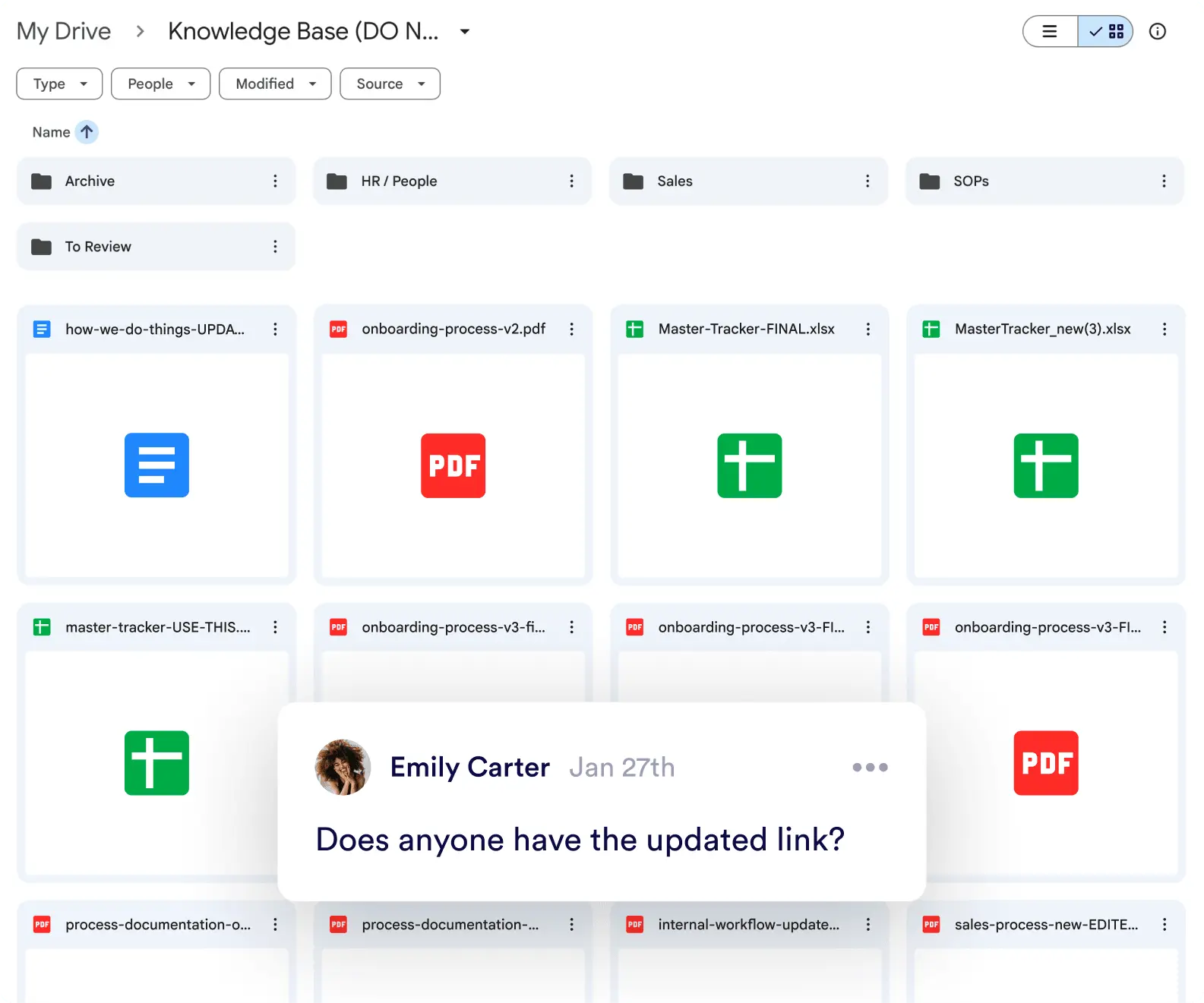
Each morning in the studio began with MS Teams opening like a floodgate, messages racing between creative directors, designers, clients, and account managers, crafting a rhythm that felt urgent yet prone to burying critical updates beneath casual chatter. Notion carried brand guidelines, project briefs, and research insights, yet often trailed behind the evolving pace of client demands, its pages left to gather fragments of relevance without fully reflecting current work. Google Drive shouldered an ever-growing archive of assets, swelling with revised logos, social graphics, and campaign imagery, none of which consistently linked back to conversations explaining the rationale behind each iteration. Trello served as the record of production, but relied on producers manually translating updates gathered from meetings or Slack messages into shifting task cards. Client feedback arrived in pulses, uneven and unscheduled, landing across multiple channels:
Emails containing annotated PDFs with layout critiques
MS Teams messages dropping quick thoughts mid-conversation
Comments left on outdated versions of shared documents
Designers found themselves revising an ad layout only to discover that pivotal guidance was locked inside a Slack thread no one thought to revisit. Producers transcribed updates between tools, while new hires required long hours of orientation because past project decisions lay dispersed across disparate channels. Billable hours slipped away into repeated coordination, and creative capacity shrank as context had to be pieced back together time after time.
Decision to Trial Pivot
The agency's leadership arrived at the decision to trial Pivot not merely as an exercise in swapping software, but as a deliberate move to reclaim hours eroded by searching, copying, and re-explaining work across multiple systems. What drew their attention toward Pivot was the prospect of:
Rooms capable of containing conversations, visual drafts, and decision records within the same environment
The capacity to embed voice and video updates, carrying subtlety and creative intention often flattened in written messages
A place where asset libraries, timelines, and brand references could remain physically close to ongoing project work rather than scattered across disconnected applications
The agency recognized that the true cost of their existing approach extended beyond budget lines, manifesting instead in creative energy siphoned away by fragmented context and repeated explanations.
How Pivot Was Implemented
To test Pivot's value without risking client relationships across the board, the agency chose one significant brand refresh project as a pilot. It was a high-visibility assignment, ripe for revealing where their current processes strained under the weight of shifting timelines, asset versions, and rounds of client feedback.
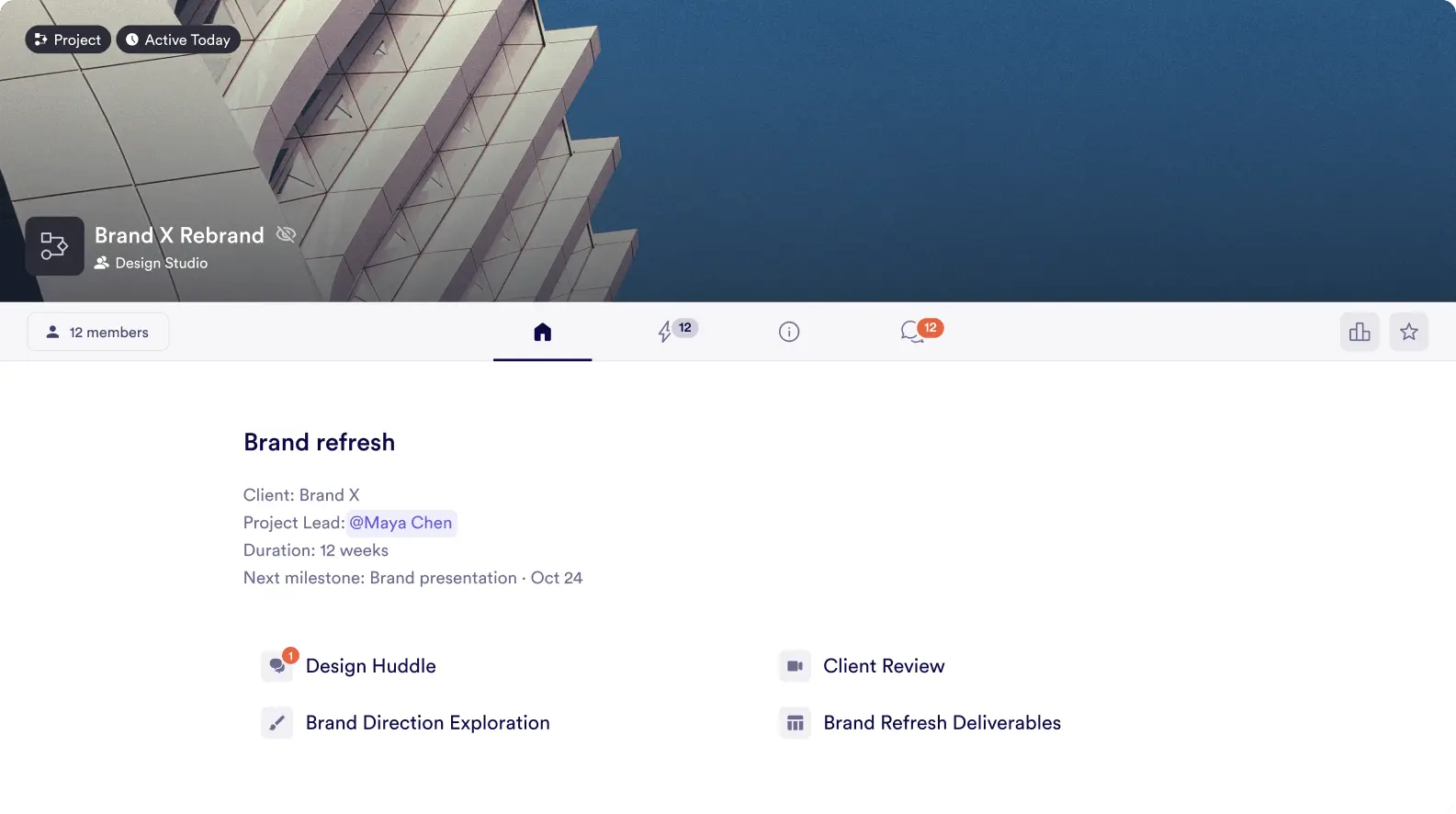
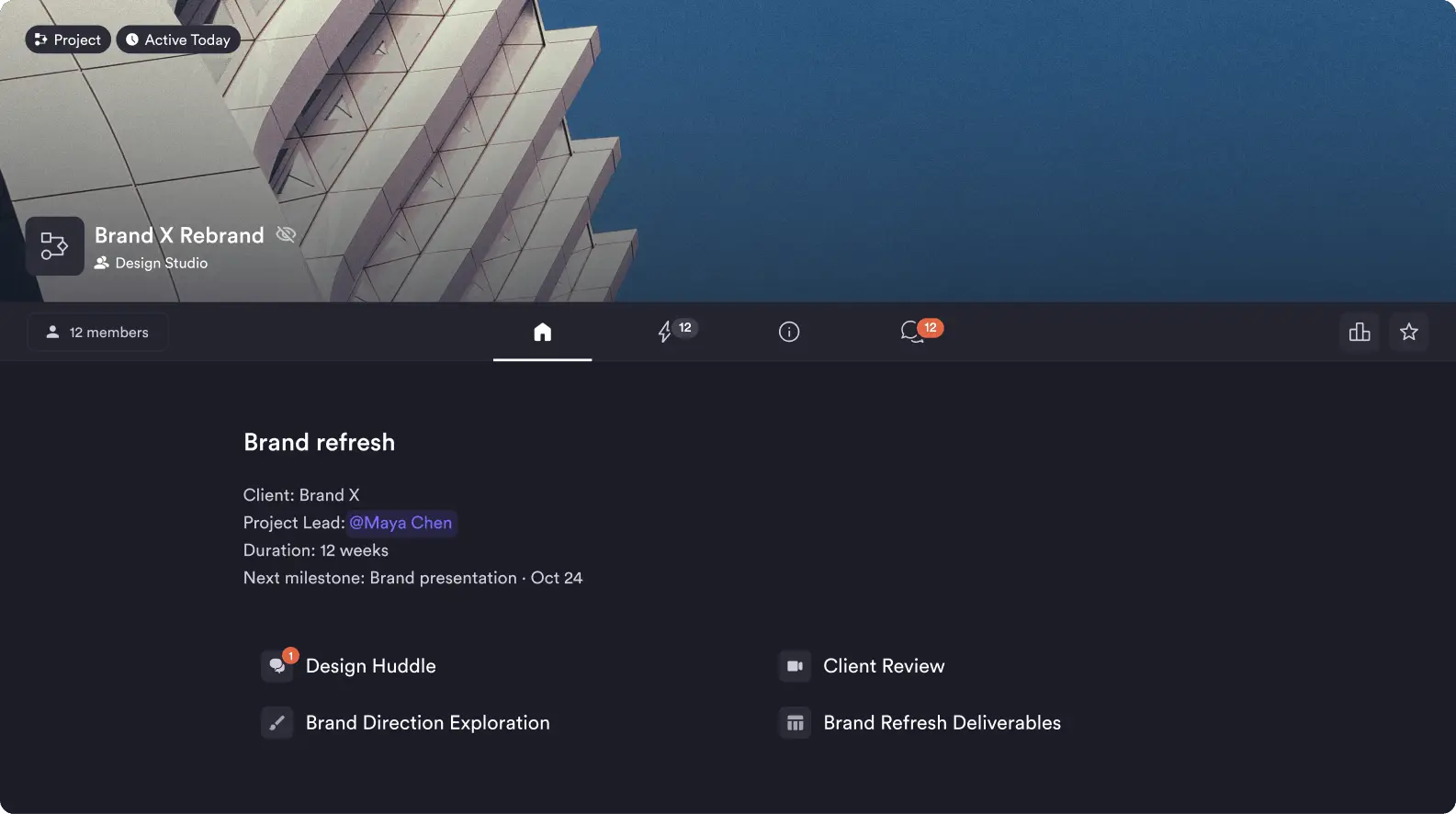
They constructed a dedicated space for this client, layering in subtle details to mirror the brand itself:
Custom cover imagery matching the client's visual identity
Icons representing the campaign's creative themes
Within that space, they carved out specialized rooms:
Daily creative check-ins among designers
Internal art-direction critiques, safe from client eyes
Dedicated rooms for structured client feedback and approvals


They wove Pivot's Blocks into every facet of the work:
Pages held evolving creative briefs and art direction notes
Infinite Canvas acted as a digital whiteboard for moodboards, wireframes, and layout explorations
Databases tracked:
Asset iterations, linked directly to visual previews
Feedback notes tied to specific design files
Status markers indicating whether client sign-off had been secured
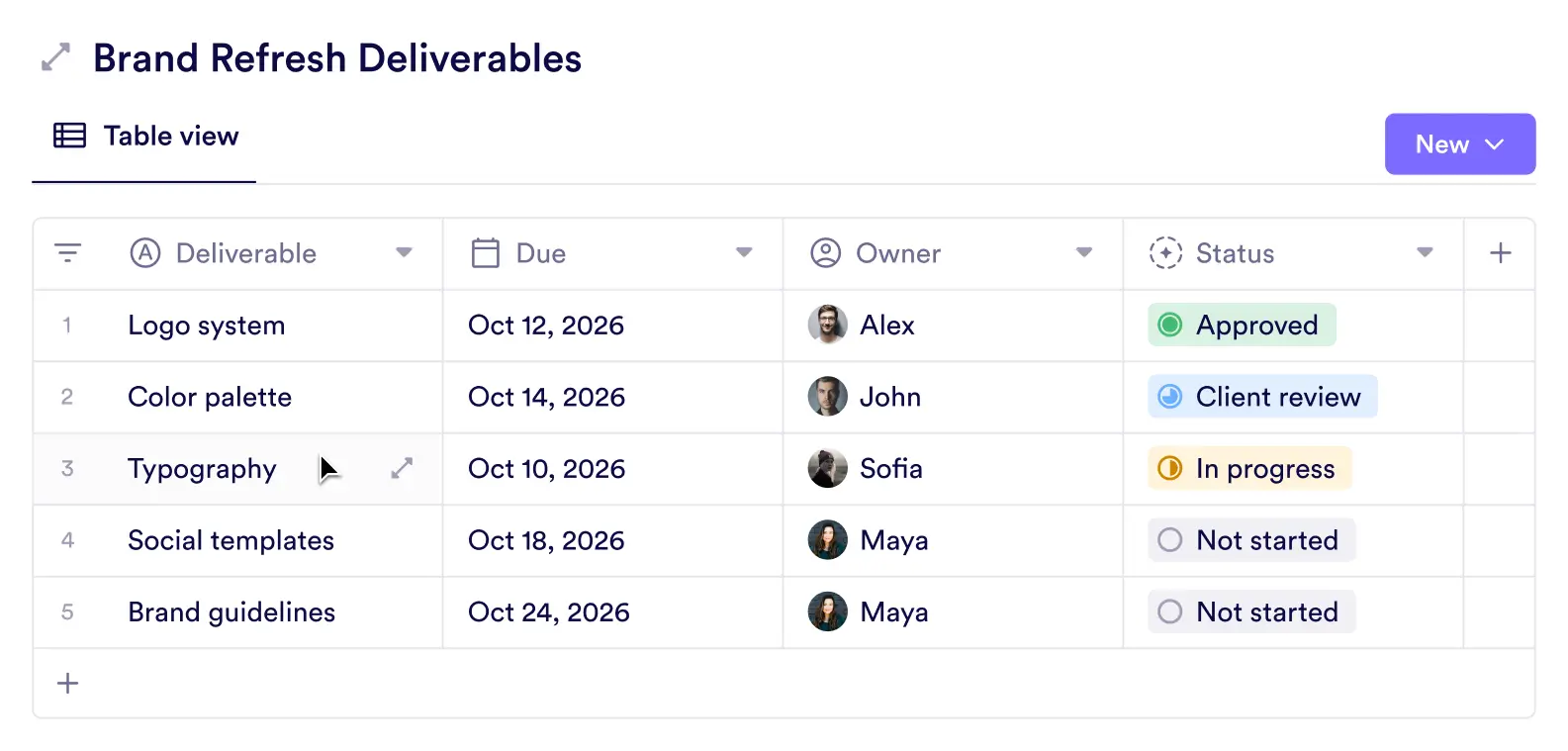
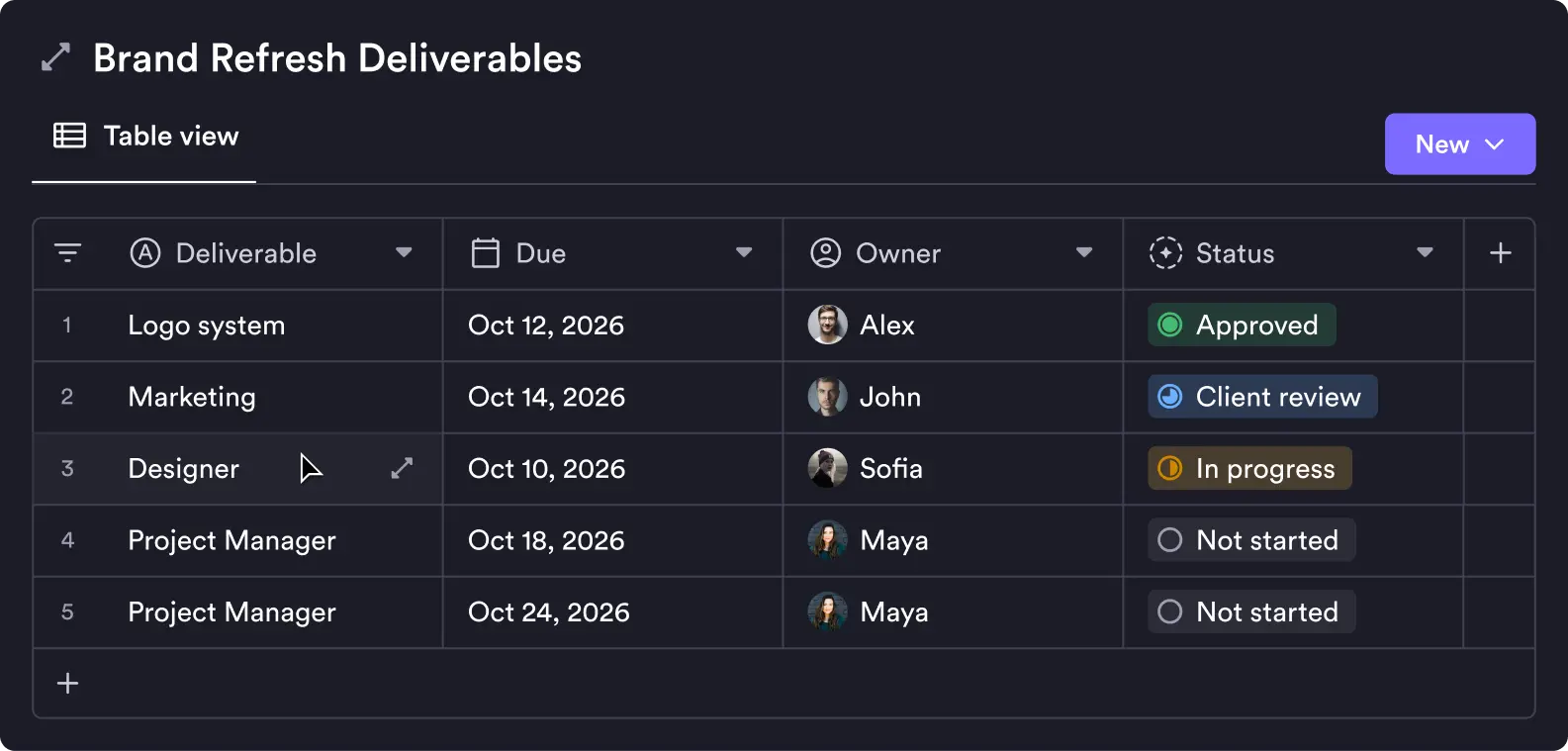
Calendars mapped campaign deadlines alongside production milestones
Charts visualized time allocations across designers and projects
Forms collected client feedback in structured formats, reducing back-and-forth emails
Files kept final images, working files, and video previews directly alongside the conversation threads they sparked
To tame the flood of notifications, designers subscribed only to rooms tied to their current assignments, while project leads fine-tuned updates for critical phases like creative reviews and client presentations.
Operational Changes Observed
As the agency settled into Pivot, shifts took shape not merely in how tasks were managed, but in the sense of mental space reclaimed by both teams and clients. Creative leads no longer spent hours migrating updates from rapid-fire chats into isolated documents, as conversations and files found a single habitat. Clients entered rooms where design iterations stood beside the very discussions that had shaped them, maintaining a running memory of choices and approvals without constant repetition. New hires arrived to find entire brand histories residing in one Space, gaining understanding through voice updates, visual timelines, and threaded commentary instead of navigating disconnected records. Producers spoke of fewer hours spent drafting repeated emails to clarify schedules, since deadlines and feedback now sat embedded in Blocks visible to all.
Quantitatively, the agency tracked tangible gains:
Approximately ten hours saved each week once consumed by coordination and tool-switching
Client approval timelines shortened by several days due to direct feedback embedded alongside designs
Beyond metrics, shifts in culture surfaced:
Designers described less cognitive fatigue without constant toggling between applications
Clients praised the greater continuity and visibility in creative processes, reinforcing trust and streamlining communication inside a remote team app designed for team collaboration and workflow automation rather than scattered dialogues and hidden updates
Lessons Other Agencies Might Consider
For agencies whose craft depends on both visual precision and a memory of how decisions were forged, a workspace capable of gathering speech, images, and documentation under one roof can replace scattered fragments with a continuous thread of context. Lessons from this studio's experience point toward practical shifts worth weighing:
Rooms that combine voice updates, visual previews, and written records enable creative work to advance without endlessly retracing prior steps
Database Blocks prevent brand guidelines and production details from dissolving into a patchwork of separate files
Short video recordings capture nuance and design rationale that written summaries can flatten
Permission controls ensure client access does not sacrifice internal dialogue or private creative debate
For a studio immersed in shaping color, typography, and layout, the value lay not only in recouped hours but in granting each day the continuity of the last, where ideas remained visible and accessible rather than left to fade between disconnected screens.
Ready to See Work Gathered in One Place?
If your team feels stretched across tabs and endless updates, Pivot offers a way to keep projects, discussions, and decisions anchored in one place. Step into a workspace built to hold ideas steady, so your days pick up where the last one left off.
Learn About Pivot